Articles
Comprehensive HSE Toolbox Talk Topics for Maintenance Supervisors
Maintenance supervisors play a pivotal role in ensuring the safety and efficiency of daily operations. As leaders in the workplace, they are responsible not only for overseeing tasks but also for fost
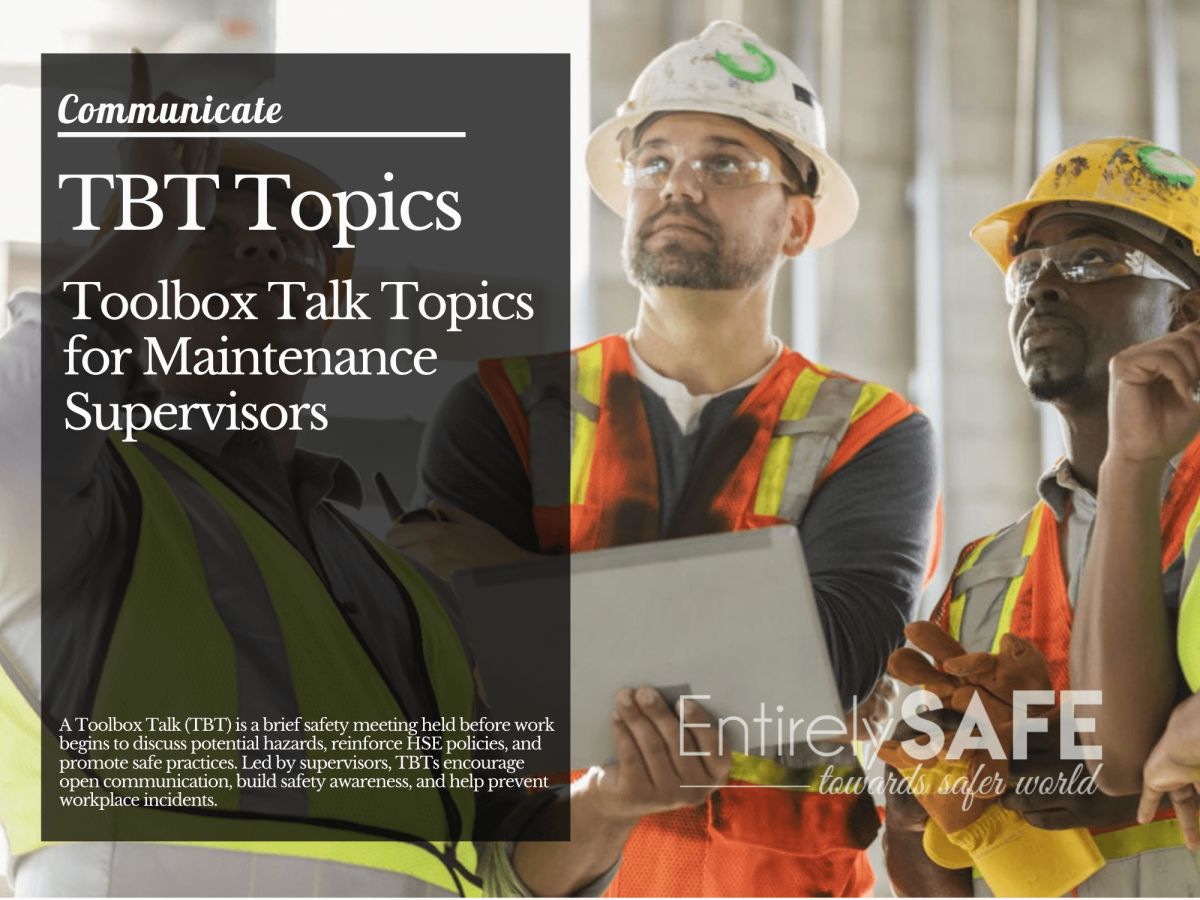
Maintenance supervisors play a pivotal role in ensuring the safety and efficiency of daily operations. As leaders in the workplace, they are responsible not only for overseeing tasks but also for fostering a culture of safety and environmental responsibility among their teams. Toolbox talks (TBTs) are a critical tool in this endeavor, serving as brief, focused discussions that address key health, safety, and environmental (HSE) topics relevant to the workplace.
This article provides a curated list of essential HSE topics tailored for maintenance supervisors. By covering these topics regularly, supervisors can enhance awareness, reduce risks, and empower their teams to work safely and responsibly. Whether addressing workplace hazards, emergency preparedness, or behavioral safety, these discussions form the foundation of a proactive safety culture.
Let this guide inspire you to lead impactful TBTs and contribute to a safer, healthier, and more environmentally sustainable workplace.
Workplace Safety Toolbox Topics
Hazard Identification and Risk Assessment (HIRA)
Safe Work Practices (SWP)
Use of Personal Protective Equipment (PPE)
Permit to Work (PTW) Systems
Working at Heights
Confined Space Entry
Lockout/Tagout (LOTO) Procedures
Hot Work Safety
Electrical Safety
Housekeeping Standards
Handling Hazardous Substances
Slips, Trips, and Falls Prevention
Safe Manual Handling and Lifting Techniques
Regulatory and Compliance Toolbox Topics
Legal Requirements and Standards
Company HSE Policies and Procedures
Audits and Inspections
Roles and Responsibilities in HSE
Incident Investigation and Reporting Toolbox Topics
Reporting Near Misses, Incidents, and Hazards
Root Cause Analysis (RCA) Methods
Lessons Learned from Previous Incidents
Understanding Risk Assessment Matrices (RAM)
Health and Wellbeing Toolbox Topics
Occupational Health Hazards
Ergonomics and Preventing Musculoskeletal Disorders
Heat Stress Awareness
Dehydration Prevention and Hydration Tips
Mental Health Awareness
Workplace Hygiene and Sanitation
Behavioral Safety Toolbox Topics
Stop Work Authority (SWA)
Promoting a Safety Culture
Effective Communication and Teamwork
Reporting Unsafe Acts and Conditions
Learning from Incidents and Near Misses
Life-Saving Rules Compliance
Avoiding Complacency in Routine Tasks
Environmental Safety Toolbox Topics
Waste Management and Disposal
Spill and Leak Prevention
Chemical Handling and Storage
Air Quality Monitoring and Ventilation
Noise and Vibration Control
Environmental Impact of Maintenance Activities
Process and Equipment Safety Toolbox Topics
Process Safety Management (PSM) Overview
Safe Use of Tools and Equipment
Inspection and Maintenance of Tools and Machinery
Asset Integrity and Reliability
Energy Isolation and Stored Energy Management
Recognizing Equipment Failures
Preventing Overloading of Equipment
Dropped Object Prevention (DROPS)
Emergency Preparedness Toolbox Topics
Emergency Response Plans and Drills
Fire Safety and Firefighting Techniques
First Aid Awareness
Evacuation Procedures
Spill Control and Response
Handling Severe Weather Conditions
PPE – Personal Protective Equipment Toolbox Topics
Why the PPE is considered as the last line of defense
Types of PPE and their functions
Selecting the right PPE for the job
Proper use and fitting of PPE
Inspecting PPE before use
Maintaining and storing PPE
Addressing excuses for not wearing PPE
Real-life examples when PPE saved the day
Understanding what it cannot protect against
Seasonal PPE considerations
Heat-resistant PPE for high-temperature environments
Insulated PPE for cold weather work
Specialized PPE for high-risk tasks
Comments
Sign in to join the conversation