Articles
Confined Space Entry: Atmospheric Hazards, Rescue Planning, and the Fatal Rescuer Problem
Confined space entry kills more would-be rescuers than original entrants. A technical guide for HSE professionals on atmospheric monitoring, permit design, and building a rescue program that actually works.
May 25, 2026 · 43 views
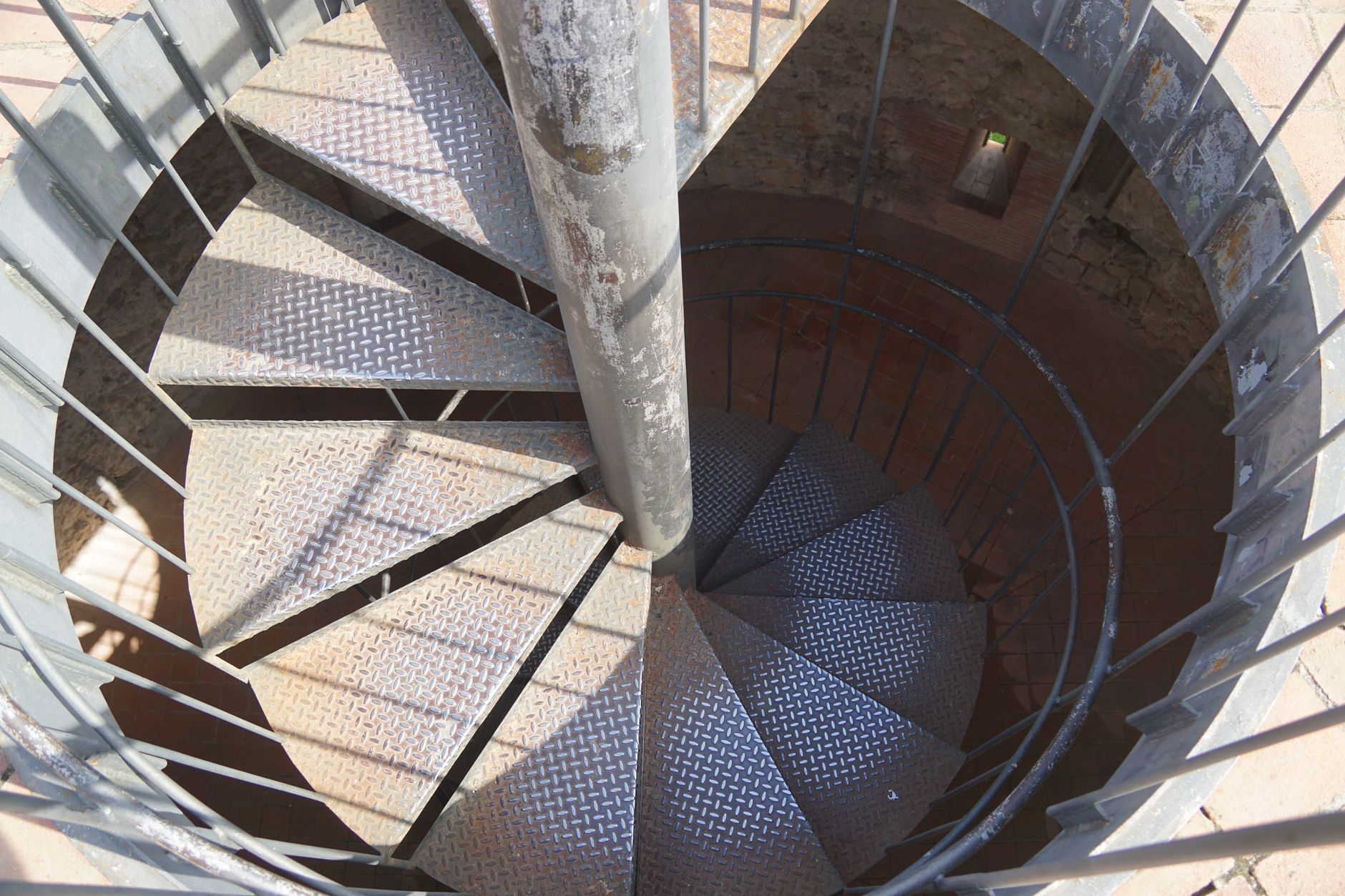
Photo by Marian Florinel Condruz on Pexels
On a Tuesday morning in 2019, a wastewater operator in a Midwestern U.S. plant climbed down into a lift station to check a clogged pump. Within four minutes he was unconscious from hydrogen sulfide exposure. His supervisor, watching from the surface, climbed down without a respirator to help him. The supervisor was dead before he reached the bottom. A third worker called for help, then climbed in. He also died.
This pattern is not an anomaly. According to a NIOSH analysis of confined space fatalities (NIOSH Publication 80-106, updated in subsequent Fatality Assessment and Control Evaluation reports), roughly 60% of confined space deaths are would-be rescuers — co-workers, supervisors, and emergency responders who entered without proper precautions to save someone already incapacitated. OSHA's 2023 enforcement data showed Permit-Required Confined Space (29 CFR 1910.146) cited in the top 15 most-cited general industry standards, with average penalties exceeding $14,000 per serious violation.
Confined space programs are a stress test for an HSE management system. They demand atmospheric science, mechanical isolation discipline, permit governance, communications integrity, and rescue readiness — all coordinated under time pressure. When any one of those elements is weak, the failure mode is multi-fatality. This article walks through the technical foundations of a defensible confined space program and the specific failure points that audits routinely miss.
What Actually Makes a Space “Permit-Required”
The OSHA definition is precise and worth re-reading every audit cycle. A confined space is one that (1) is large enough to enter and perform work, (2) has limited or restricted means of entry or egress, and (3) is not designed for continuous occupancy. A permit-required confined space (PRCS) adds at least one of four conditions: a hazardous atmosphere, a material that could engulf an entrant, an internal configuration that could trap or asphyxiate (e.g., inwardly converging walls, sloping floors), or any other recognized serious hazard.
The common failure here is misclassification. Tanks, vaults, sumps, silos, and trenches over 4 ft are obvious. Less obvious — and frequently missed — are HVAC plenums, attic crawl spaces during welding work, agitated mixing vessels (which become PRCS when stirring stops and sediment off-gasses), pipe racks during pigging operations, and ship double-bottoms during repair. NFPA 350 (2022) goes further than OSHA, recommending classification be re-evaluated every time the work scope changes, because hot work, hydroblasting, or chemical cleaning can transform a non-permit space into a permit space in minutes.
For oil and gas, ANSI/ASSP Z117.1-2022 introduces the concept of “alternative entry procedures” for spaces where the only hazard can be controlled by continuous forced-air ventilation. This is a legitimate pathway but it is heavily abused. The standard requires monitoring data demonstrating that the atmosphere remains within safe limits throughout the work — not just at the start.
Atmospheric Hazards: The Invisible Killers
Atmospheres kill in three ways: oxygen deficiency (or enrichment), toxicity, and flammability. Most confined space gas monitors test for four parameters: O2, LEL (lower explosive limit), CO, and H2S. This four-gas configuration covers the majority of municipal and general industry hazards but leaves real exposure to gases the meter cannot see.
Oxygen deficiency is the leading cause of confined space death. The threshold for “deficient” is 19.5% by volume (OSHA 1910.146); normal air is 20.9%. The lethal range begins around 16%, with unconsciousness possible in under a minute below 10%. A frequently misunderstood point: oxygen deficiency in confined spaces is rarely caused by combustion. It is caused by displacement — nitrogen used to inert a vessel, argon settling in pits, CO2 from fermentation in grain silos, or methane purging in pipelines. A worker entering an inerted vessel can lose consciousness in a single breath. There is no warning sensation; the human respiratory drive responds to CO2 buildup, not O2 loss.
Hydrogen sulfide (H2S) is responsible for the majority of multi-fatality “rescuer” incidents in wastewater, agriculture, and oil and gas. At 100 ppm it causes olfactory fatigue within 2–15 minutes — the worker literally stops smelling the rotten-egg odor that warned them. At 700 ppm a single breath can be fatal. The IDLH (Immediately Dangerous to Life or Health) value is 100 ppm; many monitors alarm at 10 ppm low / 15 ppm high.
Flammability is measured in % LEL. The action threshold is 10% LEL — at which point the space is considered hazardous and entry must be suspended or controls tightened. A common mistake is assuming that “0% LEL” means “no flammable gas present.” Catalytic bead sensors require oxygen to function; in oxygen-deficient atmospheres they under-read or read zero in the presence of significant flammable concentrations. Photoionization detectors (PIDs) and infrared (IR) sensors do not have this limitation but cost more and require species-specific calibration.
A defensible monitoring program treats the four-gas meter as a minimum, not a complete answer. Bump-test before every shift. Calibrate at the manufacturer-specified interval (typically every 6 months, or after any alarm event or impact). Pre-entry test from outside the space using a sampling pump and probe at top, middle, and bottom — vapors stratify by density. Continuous monitoring throughout occupancy is non-negotiable; the most dangerous moment is often 15–30 minutes into a job, after disturbed sludge or sediment begins off-gassing.
The Permit System: Engineering Controls into Paperwork
A permit is not a form — it is an interlock. A well-designed permit forces verification of every barrier before entry is authorized. The required elements under 1910.146(f) include space identification, purpose, date and authorized duration, entrants and attendants by name, entry supervisor, hazards present, isolation methods (LOTO, blinds, double block and bleed), atmospheric test results with instrument ID, ventilation method, communications plan, rescue services contact, equipment required, and any additional permits cross-referenced (hot work, energized work, etc.).
In practice, the two permit elements that most often fail audits are isolation verification and rescue cross-reference. Isolation means physical separation from sources of energy and material — locked valves are not enough. A line broken and blanked, or a blind installed downstream of a double-block-and-bleed configuration, is the standard for high-hazard processes. The permit should list the isolation method, the tag number of the device, the person who verified it, and the time.
Permits also need a time-bound expiration. A typical entry permit is valid for one shift maximum, with re-entry requiring re-test and re-authorization. Continuous-entry operations under a “rolling permit” are permissible but only with continuous monitoring telemetered to a supervising location and a stand-down protocol if any monitor alarms.
Rescue Planning: Where Most Programs Are One Failure Away from a Fatality
Rescue planning is the most neglected section of every confined space program I have audited. The OSHA requirement is straightforward: the employer must ensure rescue and emergency services are available, evaluate the rescuer's ability to respond in a timely manner, and practice rescues at least annually in representative spaces.
What “timely manner” means in practice is dictated by the atmospheric hazard. For IDLH atmospheres, brain damage begins within four minutes of oxygen deprivation. An off-site fire department response time of 8–12 minutes is not a rescue plan; it is a body recovery plan. NFPA 350 § 9.3 is explicit on this point and recommends in-house rescue capability or contracted on-site standby for IDLH or high-risk entries.
A credible rescue plan addresses (1) retrieval systems — full-body harnesses, retrieval lines, mechanical winches with capacity rated for the entrant plus rescue load, and tripods or davits rated for vertical entries; (2) air supply — SCBA or supplied-air with sufficient cylinder duration plus 30-minute escape, pre-positioned at the entry point; (3) communication — hardwired or intrinsically safe radio, with a backup signal protocol (rope tugs, lights) for spaces where radio fails; (4) medical capability — at minimum a rescuer trained to current first aid/CPR standard plus AED, recognizing that the survival rate from oxygen-deprivation cardiac arrest at four minutes is below 10%; and (5) scenario practice in conditions representative of the actual space, not in a clean training tower.
A test for any program: pull a random permit from the last six months and ask the entry supervisor to verbally walk through the rescue plan for that specific space. If the answer is “we'd call 911,” the program is non-compliant under 1910.146(k)(1).
Common Program Failures and How to Audit Yours
Five failures appear in nearly every confined space audit I have run.
First, inventory drift — the list of confined spaces on file does not match what is on site. New tanks, modified vessels, and temporary installations are missed. Reconcile the inventory against process flow diagrams and a physical walk-down at least annually.
Second, monitor management failure — bump test logs are missing, calibrations are overdue, or one shared monitor is moved between sites with no documentation. Maintain a per-instrument logbook with bump, calibration, and any alarm event.
Third, entry supervisor concentration — the same person is named on three permits simultaneously across the plant. The entry supervisor role under 1910.146(j) is a real responsibility, not a signature.
Fourth, attendant drift — attendants leave their post to “just check something” or assist with materials. Their sole duty is to monitor entrants and initiate rescue. Build the staffing model to allow relief without abandoning the post.
Fifth, rescue plan staleness — the contracted rescue provider has changed scope, no longer covers your site after-hours, or has not drilled in your space. Re-verify annually, document the drill, and capture lessons learned in writing.
Conclusion and Actionable Recommendations
Confined space safety rewards rigor. The technical content is well-codified — OSHA 1910.146, NFPA 350, and ANSI Z117.1 between them describe a complete program. What separates a defensible program from a paper one is whether the controls are interlocked, verified, and rehearsed.
If you do nothing else this quarter:
- Pull last quarter's permits and audit five at random against the 1910.146(f) elements. Score isolation verification and rescue planning specifically.
- Run an unannounced rescue drill in a representative space. Time everything from alarm to entrant recovery. If you exceed four minutes for an IDLH space, you have a finding.
- Reconcile your confined space inventory with a physical walk-down. Anything new, modified, or temporary gets re-classified.
- Verify monitor management — every instrument has a logbook, every bump test is documented, every calibration is current.
Confined space fatalities are predictable, preventable, and almost always multi-victim. The cost of doing this well is low; the cost of doing it badly is measured in lives and in the seven-figure liability that follows. Build the program for the day someone tries to be a hero — because that day is the test.
Comments
Sign in to join the conversation