Articles
Lessons, Accountability, and the Path Forward Fire Incident at HYNC / IMIP
On 12 October 2025, a fire broke out in the industrial area of PT IMIP (Indonesia Morowali Industrial Park) adjacent to the HYNC (Huayou Nickel Cobalt) Phase II facility. According to reports, the bla
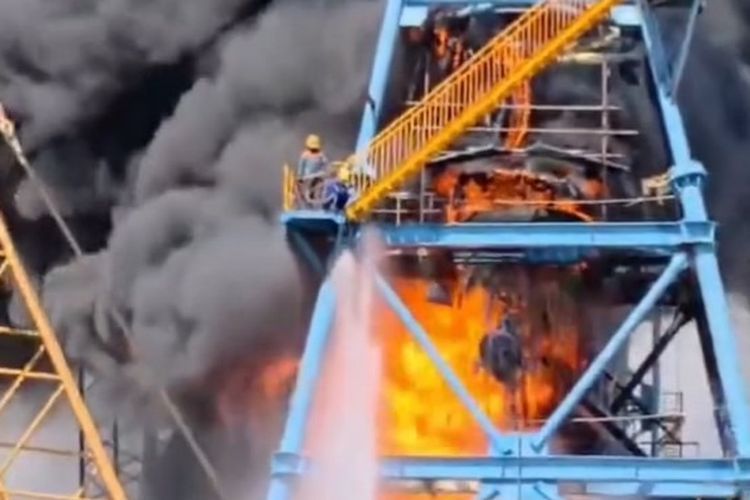
On 12 October 2025, a fire broke out in the industrial area of PT IMIP (Indonesia Morowali Industrial Park) adjacent to the HYNC (Huayou Nickel Cobalt) Phase II facility. According to reports, the blaze began at approximately 08:53 when a fiberglass tank in a new gas-scrubbing tower was ignited, presumably by welding sparks falling onto the structure. The flames became visible within minutes, and by 08:57 open fire was evident. The fire was extinguished around 09:27.
Keuangan News
Three workers were affected: one Indonesian national and two Chinese nationals. The Indonesian worker was taken to IMIP’s main clinic, while the two Chinese workers were treated at a subsidiary clinic.
Keuangan News
This incident has drawn sharp criticism from labor and safety advocacy groups, who raise concerns about safety protocols, emergency readiness, and corporate responsibility.
Key Issues Revealed
Weak Safety Controls & Lack of Fire Mitigation Measures
One major criticism is that safety was not adequately prioritized. The local union (under FSPIM) claimed that during welding operations at heights, there was no fire blanket in place to guard against stray sparks.
In facilities handling combustible or flammable materials — especially fiberglass, resins, or chemical systems — controls such as fire blankets, spark shields, hot work permits, and strict supervision are essential.
Insufficient Regulatory Oversight & Moratorium Demand
Some voices are calling for a temporary halt (moratorium) of production at both PT IMIP and HYNC, to allow for thorough safety audits. The union leadership argues that continuing operations amidst systemic safety gaps is reckless.
Worker Welfare During Shutdowns
Even if operations are suspended for safety reviews, labor representatives stress that workers’ pay must continue unabated. The demand is that safety should not be used as leverage to reduce welfare standards.
Pattern of Neglect
Observers point out that this is not an isolated event. In March this year, after a breach in a retaining wall at IMIP, several companies reportedly remained operational despite fatalities. Some critics argue that the corporate culture in the zone has tolerated high risk and loss of life while production continues.
Why This Matters (Especially for the Industry)
Reputation and Trust: Industrial parks like IMIP and joint ventures like HYNC rely on investor, stakeholder, and community confidence. A fire incident—even if contained—erodes trust unless accountability and corrective steps follow.
Regulatory & Legal Risk: If investigations find negligence or failure to comply with safety laws, companies could face penalties, lawsuits, or even operational suspension.
Worker Safety as Core Value: For companies operating in heavy industries or chemical processing, safety cannot remain a secondary priority. It must be built into planning, execution, and emergency response.
Cost Impact: Fires disrupt production, cause damage, and incur costs for repair, downtime, medical treatment, and potential fines. Proactively investing in safety systems pays dividends over time.
Recommendations & Call to Action
Immediate Independent Investigation
Engage an independent safety audit team to review the incident, root causes, and structural safety of all relevant systems (especially hot work zones). Publish a transparent report.
Suspend High Risk Operations Temporarily
Halt noncritical operations, especially those involving hot work or proximity to combustible materials, until safety safeguards are proven.
Strengthen Hot Work Management
Enforce hot work permits with rigorous review
Use fire blankets, shields, spark arrestors
Provide mandatory fire watches during and after welding
Ensure all workers are trained and certified
Enhance Emergency Preparedness
Conduct drills regularly
Ensure sufficient, functional firefighting equipment
Improve alarm, detection, and suppression systems
Train all staff (not only safety personnel) in emergency response
Worker Support & Transparency
Ensure affected workers receive medical care and compensation
Provide updates and liaise with families
Commit to paying workers during safety shutdowns
Regulatory & Community Engagement
Collaborate with relevant authorities to validate safety compliance
Involve community and stakeholder feedback, as local trust is essential
Report publicly on improvements and safety metrics
Conclusion
The fire at HYNC / IMIP should serve as a wake-up call not only to those companies but to the broader industrial sector: safety cannot remain a checkbox. It must be deeply integrated into engineering, procedures, culture, and accountability. If handled transparently, responsibly, and with compassion toward affected workers, this incident can become a turning point — one where lessons lead to stronger systems, safer workplaces, and renewed confidence in industry stewardship.
If you like, I can format this draft into a final polished blog post, or adapt it to your target audience (technical, management, general public). Would you prefer I do that?


Comments
Sign in to join the conversation