Articles
Occupational Noise and Hearing Conservation: Building a Program That Protects Hearing, Not Just the Audit
A technical guide to occupational noise management for HSE professionals: exposure dose and exchange rates, ISO 9612 measurement, the hierarchy of controls, real-world hearing protector performance, and audiometric surveillance under OSHA 1910.95 and ISO 45001.
Jul 14, 2026 · 29 views
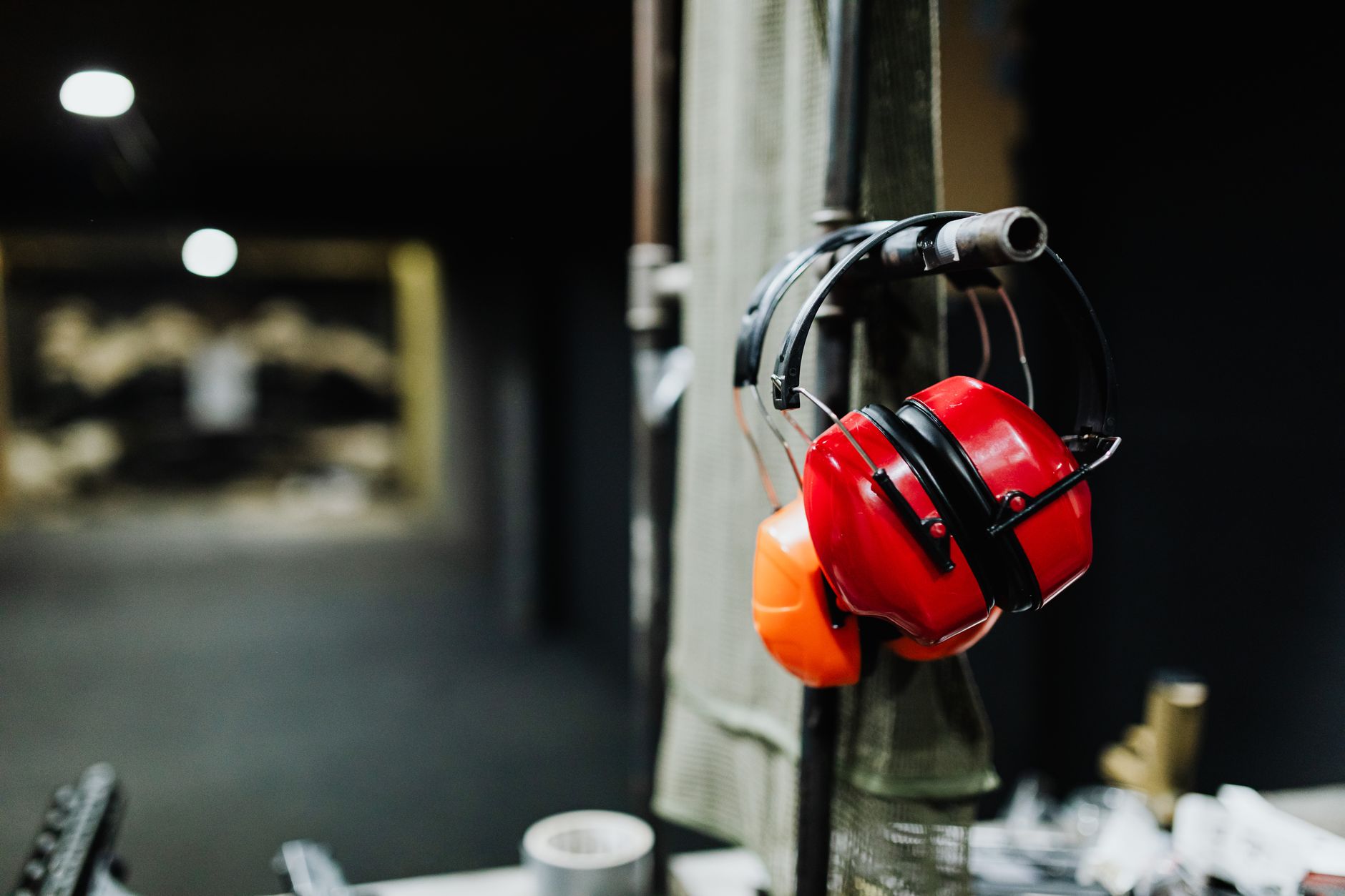
Photo by https://kaboompics.com/ on Pexels
Noise-induced hearing loss is the most common — and most quietly under-managed — occupational disease in the industrialized world. It is permanent, it is entirely preventable, and it almost never shows up in an incident log because it produces no dramatic event: no lost-time injury, no near-miss report, no photograph for the toolbox talk. The damage accrues one shift at a time, invisibly, until an audiogram confirms what the worker already suspected. For HSE professionals, that slow-burn characteristic is precisely what makes noise so easy to deprioritize and so important to manage with rigor. This article lays out the technical foundations of occupational noise management and how to build a hearing conservation program that actually protects hearing rather than simply satisfying an auditor.
The Scale of the Problem
The numbers are stark. The World Health Organization estimates that around 16% of disabling hearing loss in adults worldwide is attributable to occupational noise exposure. In the United States, the CDC and NIOSH estimate that approximately 22 million workers are exposed to hazardous noise each year, and that occupational hearing loss costs employers an estimated $242 million annually in workers' compensation for hearing-related disability. Roughly a quarter of workers exposed to hazardous noise develop measurable hearing impairment.
What makes these figures more troubling is that hearing loss rarely travels alone. There is a growing body of evidence linking chronic noise exposure to elevated cardiovascular risk, increased fatigue, degraded communication that itself contributes to incidents, and — because workers cannot hear alarms, reversing vehicles, or verbal warnings — a measurable increase in the risk of acute injury. Noise is not only a health hazard in its own right; it is a safety hazard that erodes the other controls you rely on.
Understanding the Dose: Levels, Exchange Rates, and TWA
Effective noise management begins with treating exposure as a dose, not a level. Sound pressure level is measured in A-weighted decibels (dBA), a scale weighted to approximate the frequency response of the human ear. Because the decibel scale is logarithmic, an increase of 3 dB represents a doubling of sound energy. This is the physical basis of the exchange rate — the trade-off between intensity and duration that defines an equivalent dose.
Here regulatory frameworks diverge in a way every HSE professional must understand. NIOSH, and most of the international community including the EU Physical Agents (Noise) Directive, use a 3 dB exchange rate, which is faithful to the underlying acoustics of equal energy. OSHA, under 29 CFR 1910.95, retains a more permissive 5 dB exchange rate for compliance purposes. The practical consequence is significant: under the 3 dB rule, permissible exposure time halves for every 3 dB increase, whereas under the 5 dB rule it halves only every 5 dB. A program built to NIOSH's Recommended Exposure Limit of 85 dBA as an 8-hour time-weighted average (TWA) with a 3 dB exchange rate is markedly more protective than one built merely to survive OSHA's 90 dBA Permissible Exposure Limit.
The key metrics an HSE professional should be able to calculate and interpret are the 8-hour TWA (the exposure averaged over a standard shift), the noise dose expressed as a percentage of the permissible daily exposure, and the LEX,8h used in ISO 9612 and European regulation. ISO 9612:2009 provides the internationally accepted methodology for determining occupational noise exposure, offering task-based, job-based, and full-day measurement strategies together with a framework for quantifying measurement uncertainty — a detail too often omitted from in-house assessments.
Measuring Exposure Correctly
Area noise surveys with a sound level meter tell you where the loud places are; they do not tell you what any individual worker actually receives across a shift. For that you need personal dosimetry — body-worn dosimeters sampling the noise at the wearer's ear over a representative working period. A defensible assessment strategy typically combines both: an area survey to map the noise landscape and identify zones requiring signage and controls, and personal dosimetry on a representative sample of each similar exposure group (SEG) to quantify actual dose.
Several technical points separate a credible assessment from a box-ticking one. Instruments must be calibrated before and after each measurement session, with results discarded if calibration drift exceeds tolerance. Measurement periods must be genuinely representative of the work performed, capturing peak-production days rather than a quiet Friday. Impulsive or impact noise — from stamping presses, pneumatic tools, or riveting — requires attention to the C-weighted peak sound pressure level, which OSHA caps at 140 dB and the EU at 137 dB(C), because peaks capable of causing instantaneous acoustic trauma can hide inside an acceptable-looking average. And measurement uncertainty should be reported, not buried; a TWA of 84 dBA with an uncertainty of ±3 dB sits squarely on the action level and should be treated accordingly.
The Hierarchy of Controls Applied to Noise
The single most common failure in noise management is jumping straight to hearing protection. Under both ISO 45001's requirement to apply the hierarchy of controls and OSHA's own guidance, personal protective equipment is the control of last resort — yet it is where most programs begin and end. A technically sound program works down the hierarchy deliberately.
Elimination and substitution come first: specifying quieter equipment at the procurement stage through a buy-quiet policy is the highest-leverage intervention available, because it removes the hazard before it enters the workplace and costs nothing beyond a specification clause. A pump, compressor, or hand tool selected for a lower sound power rating pays back for its entire service life.
Engineering controls follow: enclosures around noisy machinery, vibration isolation and damping to reduce structure-borne noise, acoustic barriers and absorptive treatments to cut reverberation, mufflers and silencers on exhausts and pneumatic ejectors, and simple maintenance practices such as replacing worn bearings that are often the loudest offenders. Even a partial enclosure can deliver 5 to 10 dB of reduction — the difference between a hazardous and a controlled area.
Administrative controls reduce the duration of exposure: rotating workers out of high-noise tasks, scheduling the loudest operations when fewest people are present, and establishing and signing hearing protection zones. Only after these have been exhausted does hearing protection become the residual control — and even then it must be selected, fitted, and verified with the same discipline as any other critical barrier.
Hearing Protection That Actually Protects
The gap between a hearing protector's laboratory-derated rating and its real-world performance is one of the most consequential facts in occupational hygiene. Manufacturers publish a Noise Reduction Rating (NRR) derived under ideal laboratory conditions; field attenuation is routinely far lower because of imperfect fit, incorrect insertion, and the simple reality that protectors are removed for communication. NIOSH recommends derating the labeled NRR — commonly by 25% for earmuffs, 50% for formable earplugs, and 70% for other earplugs — before estimating protected exposure. A worker with a labeled NRR of 30 may in practice be receiving only 9 to 15 dB of attenuation.
Two developments have improved this picture. Fit-testing systems now measure a worker's individual Personal Attenuation Rating (PAR), turning a guess into a measured value and providing a powerful training moment when a worker sees that their earplug is delivering half the protection they assumed. And attention to over-protection has grown: attenuating a worker down to 65 or 70 dBA can isolate them from warning signals and speech, encouraging them to remove protection entirely. The goal is to bring the protected exposure to a safe but communicative level, typically in the 75 to 80 dBA range.
Audiometric Surveillance: The Program's Feedback Loop
Audiometric testing is what closes the loop. Under OSHA 1910.95, employers must provide audiometric testing at no cost to all employees exposed at or above the 85 dBA action level. The program requires a baseline audiogram established within six months of first exposure (following at least 14 hours away from workplace noise so that temporary threshold shift does not contaminate the baseline), followed by annual audiograms compared against that baseline.
The critical metric is the Standard Threshold Shift (STS) — an average worsening of 10 dB or more at 2000, 3000, and 4000 Hz in either ear relative to baseline. An STS is not merely a paperwork trigger; it is the early-warning signal that the program is failing for that individual, and it demands action: retraining, refitting of protection, re-evaluation of controls, and medical referral where indicated. A program that records STS rates but never investigates them has instrumented its own failure without responding to it. Trending STS incidence across similar exposure groups is one of the most useful leading-lagging hybrid indicators available in occupational hygiene, pointing to specific areas or crews where controls are breaking down.
Practical Recommendations
For HSE professionals looking to strengthen a noise program, several actions deliver disproportionate value. Adopt the NIOSH 85 dBA REL with a 3 dB exchange rate as your internal standard rather than defaulting to the less protective regulatory floor. Institute a buy-quiet procurement policy that requires sound power data on new equipment purchases. Move from labeled NRR to measured PAR through fit-testing, at least for high-exposure groups. Treat every Standard Threshold Shift as a mini-investigation rather than a filing task. And integrate noise exposure data into your broader occupational health surveillance so that trends are visible to leadership alongside injury metrics.
Conclusion
Occupational hearing loss endures as a mass-scale, permanent, and wholly preventable injury precisely because it is silent in every sense that matters to a busy safety function. It generates no incident, no immediate cost, and no visible casualty. The professional response is to make the invisible measurable: to quantify dose rigorously, drive control down the hierarchy from procurement onward, verify that protection performs in the field rather than on paper, and use audiometric surveillance as a genuine feedback loop rather than a compliance artifact. A hearing conservation program built on those principles does more than satisfy 29 CFR 1910.95 or align with ISO 45001 — it ensures that the workers who build, maintain, and operate our facilities can still hear their grandchildren when the shift work is over.
Comments
Sign in to join the conversation