Articles
Preventing Catastrophic Failures: Crucial Safety Protocols for Industrial Pressure Testing
Following a tragic pressure testing fatality in Quebec, this article explores the critical safety measures, exclusion zones, and remote monitoring protocols required to manage stored energy hazards.
Sep 5, 2026 · 16 views
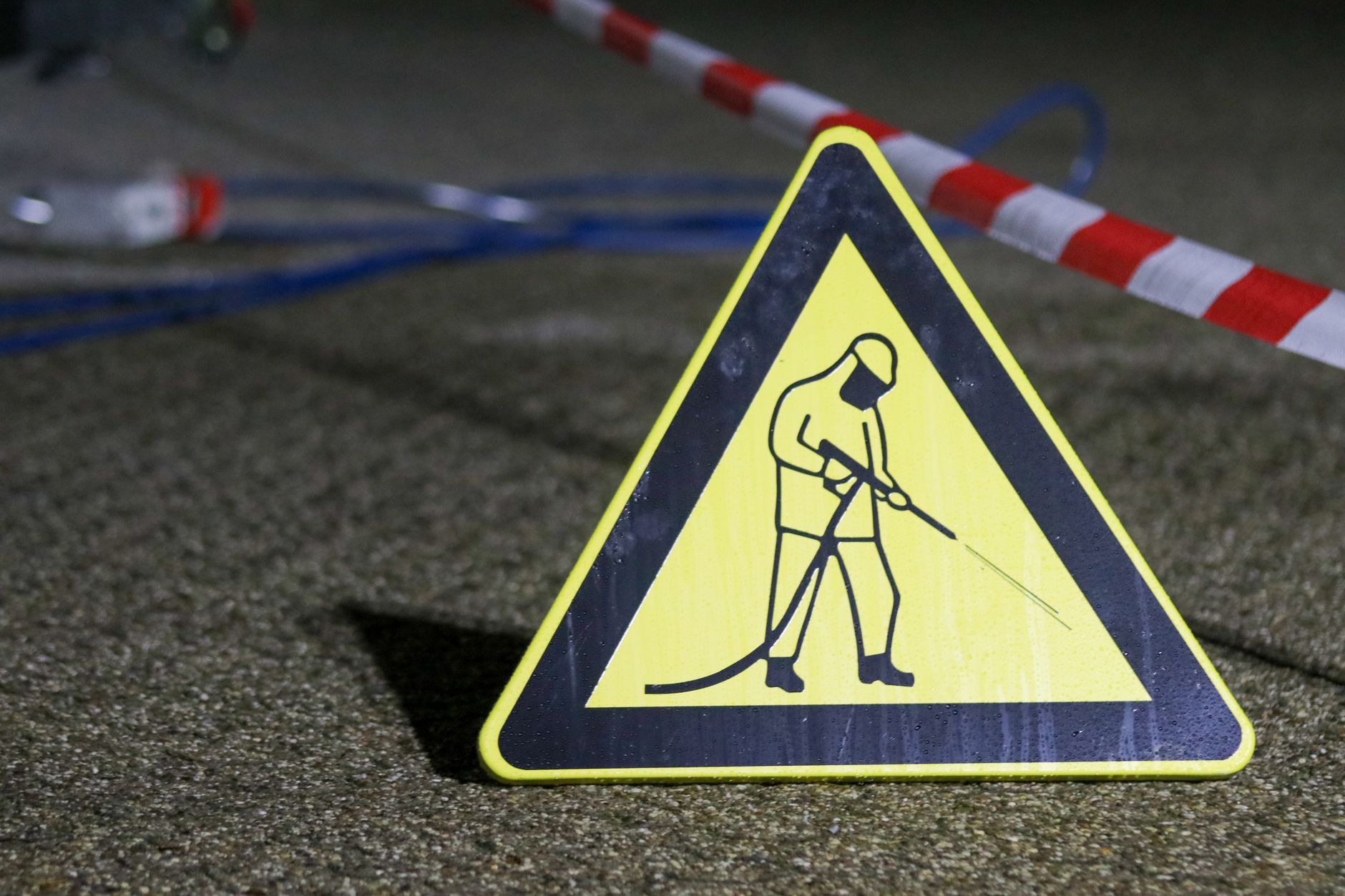
Photo by Freek Wolsink on Pexels
The Lethal Potential of Stored Energy
Pressure testing is a routine yet highly hazardous operation across construction, manufacturing, and oil and gas industries worldwide. While designed to verify the integrity of piping systems and vessels, the process itself carries immense risk due to the sheer volume of stored energy. A recent tragedy in Quebec, where a foreman was fatally injured after a pipe being pressure tested failed and launched a deadly piece of metal, serves as a stark reminder of these dangers. Reported by Canadian Occupational Safety, this incident underscores the absolute necessity of strict safety protocols, engineering controls, and robust exclusion zones during pressure testing operations.
When a system is pressurized, it stores energy proportional to the volume of the system and the test pressure. If a component fails—whether it is a weld, a valve, a flange, or the pipe wall itself—this stored energy is released instantaneously. The resulting blast can shatter nearby equipment, collapse structures, and launch high-velocity projectiles capable of causing fatal injuries to anyone in the vicinity.
Hydrostatic vs. Pneumatic Testing: Evaluating the Danger
To manage the risks of pressure testing, safety professionals must understand the physics of the test medium. There are two primary methods of pressure testing: hydrostatic and pneumatic. Hydrostatic testing uses an incompressible liquid, usually water, while pneumatic testing uses a compressible gas, such as air or nitrogen.
Because liquids do not compress significantly, they store relatively little energy. If a hydrostatic system fails, the pressure drops almost immediately, resulting in a localized leak or rupture with minimal projectile risk, although high-pressure fluid jets remain dangerous. Conversely, gases compress significantly under pressure, storing vast amounts of potential energy. A failure during a pneumatic test is equivalent to an explosion. The gas expands rapidly to its original volume, tearing apart weak points and propelling fragments of metal, fittings, or tools at supersonic speeds. Because of this extreme hazard, pneumatic testing should only be conducted when hydrostatic testing is technically unfeasible, and always under much stricter safety controls.
Establishing and Enforcing Rigid Exclusion Zones
One of the most critical administrative controls during any pressure test is the establishment of an exclusion zone. An exclusion zone is a designated, barricaded area where entry is strictly prohibited while the system is under pressure. The size of this zone must be calculated based on the maximum potential energy release and the calculated travel distance of potential projectiles.
The Quebec tragedy highlights a common and dangerous industry practice: personnel standing too close to the pressurized system to monitor gauges, inspect for leaks, or supervise the work. Even experienced supervisors and foremen can fall victim to the complacency that sometimes surrounds routine tasks. During the pressurization phase, and while the system is held at test pressure, absolutely no personnel should be inside the exclusion zone. The zone must be clearly demarcated with physical barriers, such as red danger tape or temporary fencing, and warning signs reading: "DANGER: HIGH PRESSURE TESTING IN PROGRESS - KEEP OUT."
Implementing Remote Monitoring and Engineering Controls
If workers must remain outside the exclusion zone, how do they monitor the test? The answer lies in remote monitoring technology. Relying on manual, analog pressure gauges mounted directly on the test manifold requires workers to approach the pressurized system to read them. This is an unacceptable risk.
Modern safety standards dictate the use of digital pressure transmitters and remote monitoring systems. These devices allow technicians to monitor pressure levels, temperature, and hold times from a safe distance, well outside the calculated exclusion zone. Data can be transmitted via long cables or wireless telemetry to a control station, a vehicle, or a portable screen behind a blast barrier. Furthermore, isolation and bleed-off valves should be located outside the exclusion zone. If a leak is detected or if the test must be aborted, operators can safely depressurize the system from a distance without exposing themselves to the danger zone.
When an exclusion zone cannot be made large enough due to spatial constraints—such as in tight indoor workshops or crowded industrial facilities—engineering controls must be implemented to contain potential failures. Blast shields, containment enclosures, or heavy steel barriers can be constructed around the test specimen to intercept projectiles and dissipate blast energy. These barriers must be engineered and rated for the maximum calculated impact force of a catastrophic failure. Additionally, temporary piping, hoses, and connections used to deliver the test medium must be secured. "Whip checks" or cable restraints must be installed at all high-pressure hose connections. If a hose connection fails, the whip check prevents the hose from thrashing violently, which can cause severe injury or damage nearby equipment.
Procedural Safeguards and Global Standards
Safety during pressure testing is not just about equipment; it is also about procedural discipline. Before any pressure is introduced into the system, a comprehensive pre-test checklist must be completed. This checklist should verify that all components are rated for the maximum test pressure, temporary blind flanges and plugs are correctly installed and secured, and welds and joints have undergone required non-destructive testing (NDT). Crucially, workers must never attempt to tighten fittings, bolts, or connections while the system is under pressure. If a leak is identified, the system must be fully depressurized, the pressure verified at zero, and only then can corrective maintenance be performed.
Regulators and standard-setting organizations worldwide provide clear guidance on pressure testing safety. In the United States, the Occupational Safety and Health Administration (OSHA) enforces general duty clauses and specific standards for pressure vessels and piping. The American Society of Mechanical Engineers (ASME) publishes standards like ASME B31.3 (Process Piping), which outlines strict requirements for leak testing. In the United Kingdom, the Health and Safety Executive (HSE) publishes Guidance Note GS4, "Safety in pressure testing." This document provides a comprehensive framework for risk assessment, barrier design, and safe systems of work. Similarly, European standards (EN) and International Organization for Standardization (ISO) guidelines emphasize the hierarchy of controls, prioritizing the elimination of pneumatic testing wherever possible.
Key Takeaways
- Prioritize Hydrostatic Testing: Always use hydrostatic testing instead of pneumatic testing unless water contamination or structural weight limitations make it impossible.
- Calculate and Enforce Exclusion Zones: Determine the safe distance based on maximum stored energy and establish physical barriers to keep all personnel out of the danger zone during pressurization.
- Utilize Remote Monitoring: Implement digital pressure transmitters and remote telemetry to monitor tests from a safe distance, eliminating the need for workers to approach pressurized equipment.
- Apply Engineering Controls: Use rated blast shields, containment enclosures, and whip checks on all temporary high-pressure hoses and connections to mitigate projectile risks.
- Never Work Under Pressure: Absolutely no adjustments, tightening of bolts, or repairs should be attempted on a system while it is under pressure. Fully depressurize and verify zero energy before intervention.
- Adhere to Global Standards: Align company procedures with established codes such as ASME B31.3 and HSE GS4 to ensure compliance and industry-best safety practices.
Comments
Sign in to join the conversation