Articles
Sleep Deprivation effect on Safety Performance
Sleep deprivation and workWe need sleep as it’s essential for maintaining levels of cognitive skills such as speech, memory and innovative and flexible thinking.It’s a period where our body recharges,
Sleep deprivation and work
We need sleep as it’s essential for maintaining levels of cognitive skills such as speech, memory and innovative and flexible thinking.
It’s a period where our body recharges, repairs and restocks itself, so when an individual is sleep deprived this recovery time is lost.
Although we can cope with sleep loss for a couple of days, eventually the body just can’t keep limping on without this essential recovery time.
Shift work and night-time working come to mind when you start a conversation about sleep, but we all know that sleep deprivation isn’t just an issue for people working antisocial hours.
For instance stress at work or worries at home can keep us awake at night, and becoming a parent is a very common reason for sleep disruption, so it makes sense for all employers to think about the broad range of causes as well as potential action to help improve sleep quality and duration.
If we think about the importance elite athletes and sports teams place on getting adequate sleep before a match or event, you can see how achieving your potential is closely linked to getting a good night’s sleep.
Taking action in the workplace
As part of our commitment to promoting healthier workplaces we partnered with Business in the Community to create a range of toolkits for employers, co-produced with businesses.
So far we’ve covered topics including mental health and musculoskeletal problems as these are the major causes of work related sickness, but a new sleep toolkit reflects the fact that businesses have consistently asked us to provide better evidence based information on sleep issues.
Of course, many workplace health concerns can be interconnected. Stress, pain from a musculoskeletal issue or depression all have impacts on sleep, and sleep disruption and deprivation can often be a symptom of other issues.
Taking action on sleep issues in the workplace is about considering prevention, like job planning or taking steps to mitigate stressors like night shifts or organisational change, as well as providing support and intervention when sleep issues are identified.
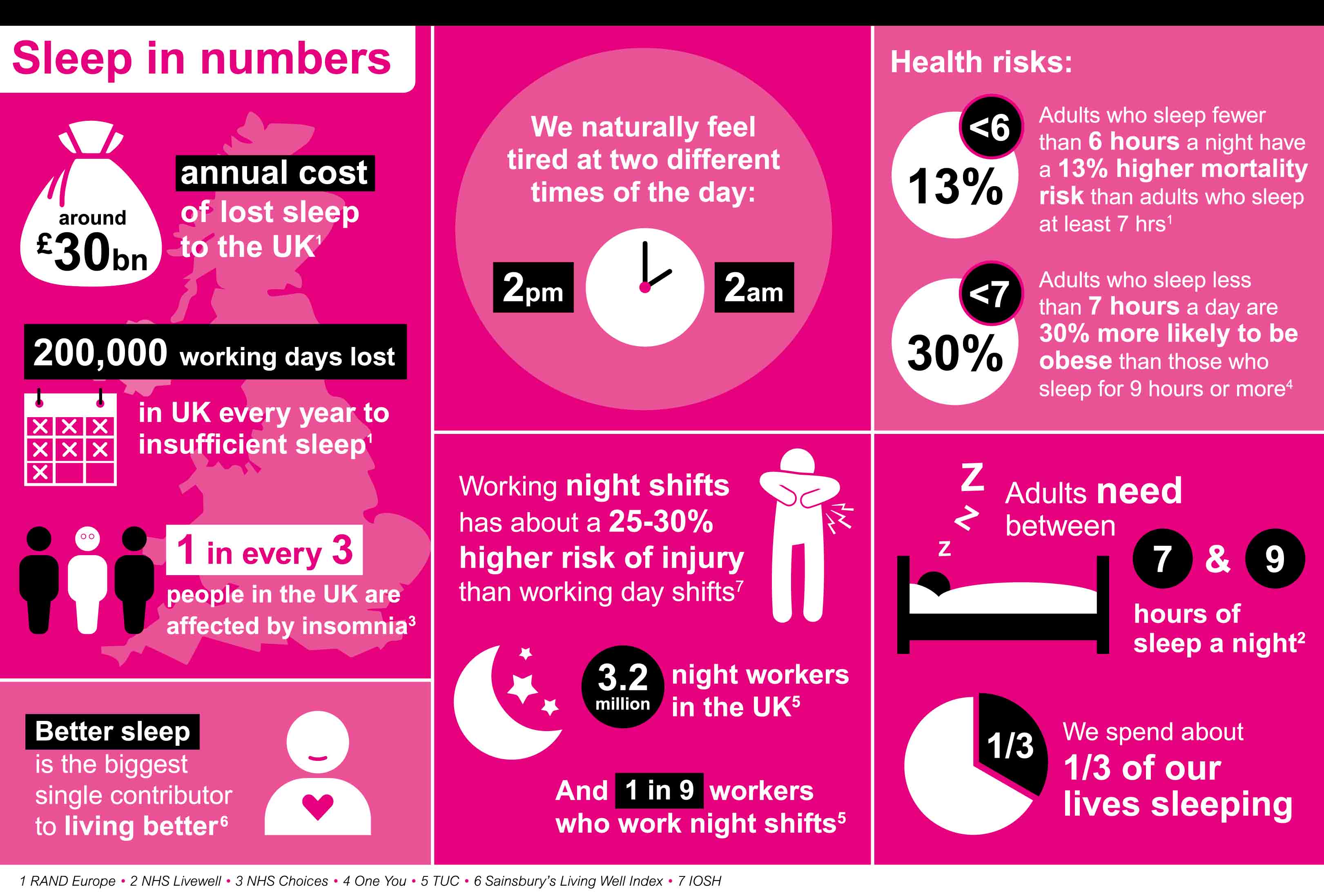
As with most health issues, prevention is always more cost effective than treatment and for business the potential gains in terms of productivity, and positive outcomes from avoiding sleep issues, could be significant.
Using the toolkit
Creating a healthier workplace is about being prepared, being open with your employees and understanding your legal duty of care to employees and to the wider community.
Feedback from businesses has helped us ensure the information is pragmatic and practical in the context of today’s workplace culture.
Case studies are provided by a number of businesses who are already taking action on sleep including Anglian Water, NATS, Guys & St Thomas Hospital, Royal Mail Group, Yorkshire Building Society and Unilever.
These are mainly large employers, but the nature of their businesses mean the practical steps recommended are often just as applicable to small and medium businesses where health and wellbeing issues are just as crucial and business critical.
At the core of the toolkit is a clear thread emphasising the key role of line managers and job planning to mitigate potential risks and provide support when and where staff need it.
Please take a look at the sleep toolkit as well as our wider range of employer facing resources developed with Business in the Community.
All our toolkits discuss actions that employers – public, voluntary or private sector – can take to create a healthier and more productive workforce, helping employees to be their best and ultimately making their business stronger.
source: publichealthmatters.blog.gov.uk
Comments
Sign in to join the conversation