minor · other
Explosion and Fire at Chalmette Refining, Louisiana – No Injuries Reported
May 7, 2026
0
fatalities
0
injured
Sequence of events
Basic Incident Information
Date of incident: Friday, May 8, 2026
Time of incident: Just before 1:00 p.m. local time
Location: Chalmette Refining facility, near Paris Road and West St. Bernard Highway, St. Bernard Parish, Louisiana, USA
Facility: Chalmette Refining (operated by PBF Energy), ~185,000 barrels/day refinery and major local employer
Incident type: Explosion and subsequent fire in an operating unit, with large smoke plume
Incident Description
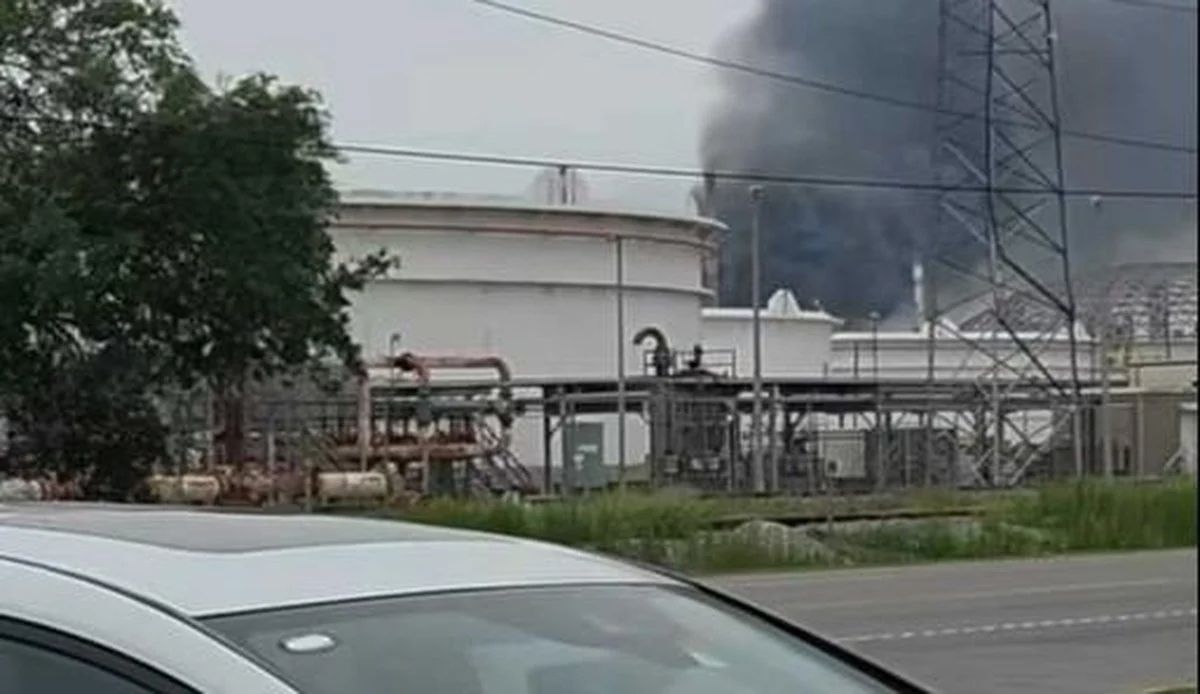
A sudden blast occurred in one of the operating units at the Chalmette Refining plant just before 1 p.m., producing a thunderous boom felt and heard for miles. Nearby homes and businesses shook, and customers at a local restaurant reported running outside, thinking a vehicle had struck the building. Thick black smoke rose from the refinery, forming a plume visible across St. Bernard Parish and in parts of New Orleans such as Bywater and Algiers.
Despite the dramatic explosion and smoke, all refinery personnel were accounted for and authorities reported no injuries. The refinery’s internal emergency team and the St. Bernard Fire Department responded within minutes, quickly containing the blaze. Fire officials stated the main fire was brought under control in about 10 minutes, although crews remained on scene cooling adjacent tanks and allowing the main fire to burn out under control.
Community and Operational Impact
Nearby schools, including Chalmette Elementary, briefly went into precautionary lockdown; students who were about to go outside were kept indoors.
Around 20 juveniles from the nearby St. Bernard Correctional Facility were temporarily evacuated but later returned once the situation stabilised.
The sheriff’s office closed eastbound lanes of West St. Bernard Highway and nearby intersections to facilitate emergency response; traffic was reopened by about 1:30 p.m.
Chalmette Refining reported that fenceline air monitoring showed no off‑site impacts, and the Louisiana Department of Environmental Quality (DEQ) conducted additional air testing with no concerning results reported as of that afternoon.
Investigation and Regulatory Status
Chalmette Refining and local authorities have not yet disclosed the specific unit or material involved in the explosion, and the root cause remains under investigation.
The Louisiana DEQ is conducting ongoing air‑monitoring and working with the refinery to understand what burned and how the incident started.
Parish officials also indicated they will review the activation and performance of the refinery’s community warning sirens as part of the post‑incident review.
Preliminary Learnings and Safety Focus
Even without detailed root‑cause data, this incident underlines several refinery process‑safety and emergency‑management points you can highlight in your write‑up:
Process safety and unit integrity
High‑hazard refinery units need robust safeguards (pressure relief, interlocks, leak detection, hot‑work controls) and rigorous maintenance to prevent explosions and fires in operating units.
Emergency response and fire control
The rapid control of the fire within about 10 minutes shows the importance of well‑drilled on‑site emergency teams and strong coordination with municipal fire services.
Community protection and communication
Effective use of traffic closures, school lockdowns, and immediate air monitoring helps manage community risk and reassure the public when a large plume is visible but measured impacts remain low.
Learning from repeat events
The refinery previously experienced a major fire in 2023 that caused significant damage, underscoring the need for systematic learning, robust incident investigation, and continuous improvement in process‑safety management.
Status
Injuries: None reported; all personnel accounted for.
Fire: Main fire contained within minutes; residual burning managed under control while surrounding tanks were cooled.
Community: Short‑term lockdowns/evacuations lifted; traffic restored; air monitoring continues with no off‑site impacts reported.
Investigation: Cause of the explosion and fire remains under investigation by Chalmette Refining and state regulators.
Speak up before the next one
EntirelySafe gives workers a place to raise safety concerns, and gives safety leaders a way to see the patterns those concerns form — before they become an incident like this one.
Comments
Sign in to join the conversation