minor · other
Explosion and Fire at Valero Port Arthur Oil Refinery, Texas
Mar 22, 2026
0
fatalities
0
injured
Sequence of events
Basic Incident Information
Date of incident: Monday, March 23, 2026
Time of incident: Daytime (exact time not specified)
Location: Valero oil refinery, Port Arthur, Texas, USA (about 90 miles east of Houston)
Incident type: Refinery explosion followed by large fire and smoke plume
Incident Description
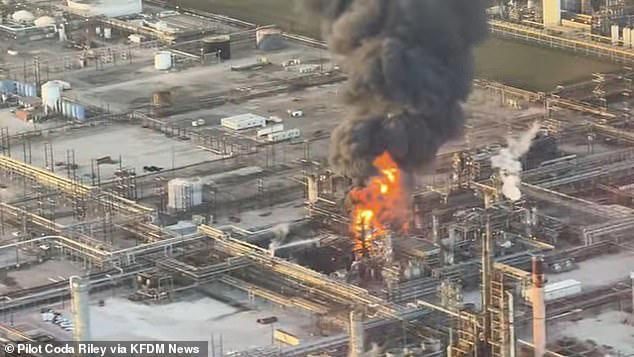
A significant explosion occurred at Valero’s Port Arthur refinery, sending a large plume of black smoke into the sky and shaking nearby buildings. Residents reported hearing a loud boom and feeling their windows rattle. The refinery, which employs about 770 people and can process roughly 435,000 barrels of oil per day, refines heavy sour crude into gasoline, diesel and jet fuel.
Following the explosion, a substantial fire burned within the refinery, producing dramatic flames and smoke visible from surrounding areas. As emergency services responded, Mayor Charlotte M. Moses urged residents in parts of the city’s west side to stay indoors, stating: “There’s been an explosion, yes, but we’re OK; everybody’s OK. They’re trying to put the fire out as quickly as possible.”
Protective Actions and Emergency Response
The City of Port Arthur issued a shelter‑in‑place advisory, instructing residents to remain indoors until an “All Clear” was given by emergency personnel.
Texas state Rep. Christian Manuel reported that the Texas Commission on Environmental Quality (TCEQ) had arrived at the refinery with air‑monitoring equipment and was working with local and state partners.
Residents were advised to limit outdoor activity, keep windows and doors closed, and follow guidance from local officials.
Casualties
Injuries: None reported.
Fatalities: None reported.
Status and Investigation
At the time of reporting, the fire was being fought and controlled by emergency responders; details on the full extent of damage were not provided.
Valero had not yet issued a detailed public statement in response to media enquiries.
TCEQ and local authorities are monitoring air quality and coordinating the incident response; the specific cause of the explosion has not been disclosed.
Preliminary Learnings and Safety Focus (for EntirelySafe publication)
With technical root causes still unknown, this incident nonetheless highlights several key refinery safety and emergency‑management themes:
High‑hazard refinery operations handling large volumes of flammable hydrocarbons require robust process safety systems, including pressure‑relief, leak detection, and ignition source control, to prevent explosions and major fires.
Effective coordination between refinery operators and public authorities (city leadership, environmental regulators, emergency management) is critical for timely public warnings such as shelter‑in‑place orders and air‑quality monitoring.
Clear public communication that balances reassurance (“no injuries reported”) with practical protective guidance (stay indoors, close windows, limit outdoor activity) helps maintain community trust during visible industrial incidents.
Speak up before the next one
EntirelySafe gives workers a place to raise safety concerns, and gives safety leaders a way to see the patterns those concerns form — before they become an incident like this one.
Comments
Sign in to join the conversation