minor · other
Factory Fire and Suspected Explosion in Yangju, Gyeonggi, Injures Three and Triggers Evacuation
Mar 30, 2026
0
fatalities
0
injured
Sequence of events
Basic Incident Information
Date of incident: Tuesday, 31 March 2026
Time of incident: Around 3:49 p.m. (local time)
Location: Factory in Yangju, Gyeonggi Province, South Korea
Incident type: Factory fire with suspected internal explosion and off‑site smoke impact
Incident Description
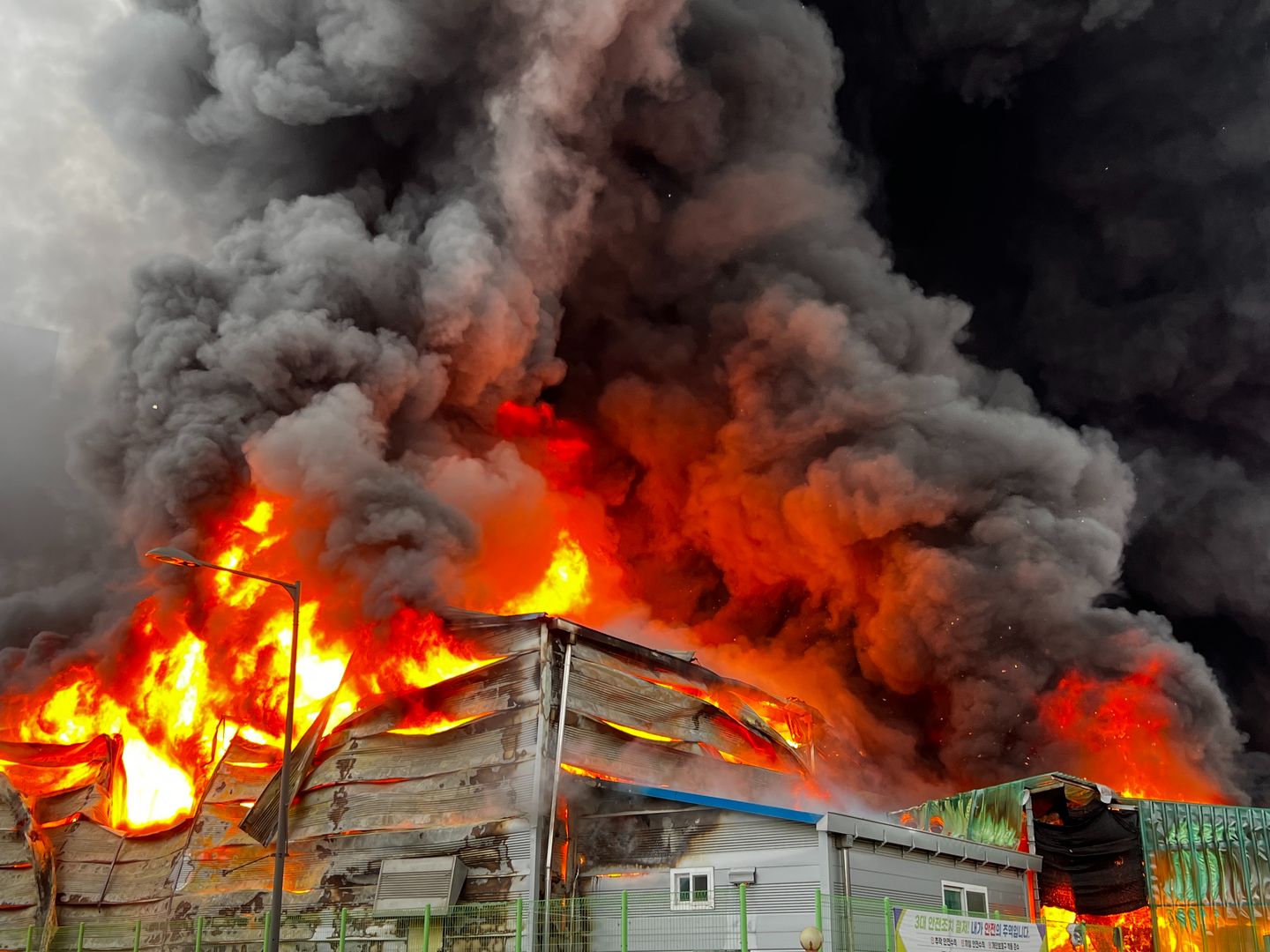
At approximately 3:49 p.m., a fire broke out at a factory in Yangju, Gyeonggi, sending thick black smoke into the sky and prompting dozens of emergency calls, including from witnesses in nearby Paju who could see the smoke plume. Fire authorities reported that three people were injured, including two with minor injuries such as second‑degree burns to the face, and 17 other workers evacuated the facility on their own.
Witnesses and callers reported hearing explosion‑like sounds from the site, and authorities suspect an explosion occurred inside the factory, though this has not yet been formally confirmed. A Level 1 response was declared at around 4:11 p.m., and 97 personnel with 40 pieces of firefighting equipment were deployed to contain the blaze.
Emergency Response and Public Alerts
Response level: Level 1 emergency response activated by fire authorities.
Resources deployed: 97 personnel and 40 firefighting/response vehicles and equipment.
Injuries: Three injured, including two with second‑degree facial burns, all described as minor.
Evacuation: 17 factory workers self‑evacuated from the building.
Public alerting: Yangju City Hall issued an emergency alert advising drivers to avoid roads near the factory and urging nearby residents to evacuate.
Investigation and Damage Assessment
Fire authorities plan to investigate the exact cause of the fire, verify whether an explosion occurred, and assess the full extent of property damage once the blaze is completely extinguished. No detailed information on the factory’s products or processes was provided in the initial report.
Preliminary Learnings and Safety Focus (for EntirelySafe publication)
With limited technical detail, learnings should remain general and focused on fire and explosion preparedness in industrial facilities:
Ensure robust fire prevention and protection systems (housekeeping, ignition control, detection, alarms, and suppression) appropriate to the materials and processes in use.
Plan and regularly drill emergency evacuation procedures so workers can self‑evacuate quickly and safely, as occurred here.
Establish clear coordination with local authorities for public alerts, traffic control, and potential community evacuation when smoke plumes and suspected explosions occur.
After such incidents, conduct thorough root‑cause analysis (including explosion forensics where relevant) and implement corrective actions around equipment integrity, process safety, and emergency response planning.
Speak up before the next one
EntirelySafe gives workers a place to raise safety concerns, and gives safety leaders a way to see the patterns those concerns form — before they become an incident like this one.
Comments
Sign in to join the conversation