minor · other
Fatal Ground Collision Between Air Canada Jet and Firefighting Vehicle
Mar 21, 2026
0
fatalities
0
injured
Sequence of events
Basic Incident Information
Date of incident: Late Sunday night, March 22, 2026 (local time)
Time of incident: About 11:40 p.m. ET
Location: Runway 4, LaGuardia Airport, New York City, USA
Aircraft: Air Canada Express CRJ‑900, arriving from Montreal (operated by Jazz Aviation)
Incident type: Ground collision between passenger aircraft and firefighting vehicle during taxi after landing
Incident Description
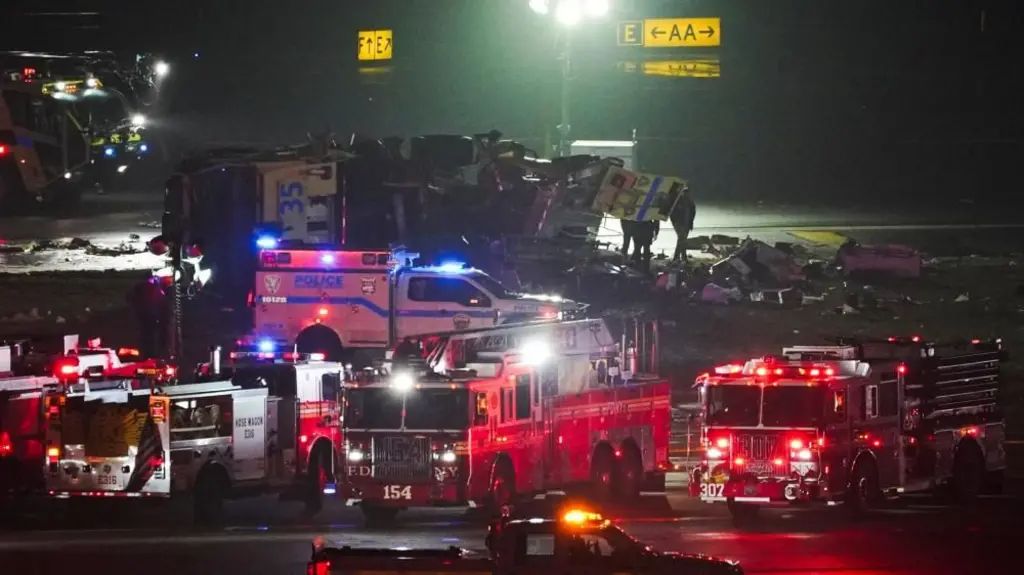
According to the Port Authority of New York and New Jersey, at approximately 11:40 p.m. a Jazz Aviation flight operating as Air Canada Express struck an Aircraft Rescue and Firefighting (ARFF) vehicle on Runway 4 while the vehicle was responding to a separate incident. The aircraft had already landed from Montreal and was moving at about 24 mph when the collision occurred.
The impact caused severe damage to the front of the aircraft and left it resting with its nose upturned, while the firefighting vehicle was overturned and surrounded by debris. Images and footage from the scene show a heavy emergency services presence, with airport operations halted and runways closed.
Casualties
Fatalities:
Both pilots of the Air Canada flight were confirmed dead.
Injuries:
41 passengers and crew from the aircraft, plus the two officers in the firefighting vehicle, were taken to hospital; 32 have since been discharged, while some remain with serious injuries.
The sergeant and police officer in the firefighting vehicle are in stable condition with no life‑threatening injuries.
Immediate Response and Airport Status
Emergency response protocols were activated immediately, with Port Authority Police, New York City Fire Department, and other agencies on scene.
All streets and highway exits into LaGuardia were closed; authorities warned of cancellations, traffic delays, and urged people to avoid the area.
LaGuardia Airport was closed “until further notice” and later stated it would remain closed until at least 14:00 local time (18:00 GMT) to facilitate investigation and recovery.
All 72 passengers and 4 crew on board the aircraft were accounted for.
Investigation
The US National Transportation Safety Board (NTSB) has opened an investigation to examine all aspects of the crash, including:
The speed of the aircraft at the time of impact.
The staffing and operations of the air traffic control tower.
Whether anyone was ejected from the aircraft.
The Port Authority Police Department is working with airline partners and federal authorities to support the investigation and provide further updates.
Preliminary Aviation Safety Focus
Given that detailed causal information is not yet available, learnings should be framed around ground operations and vehicle–aircraft interface risks:
Strict control and coordination of emergency vehicle movements on active runways and taxiways, including clear ATC permissions, communication protocols, and low‑visibility / night‑time safeguards.
Robust situational awareness and ground surveillance systems (surface movement radar, ground radar, lighting and signage) to minimise risk of vehicle–aircraft conflicts during emergency responses.
Comprehensive emergency planning for large airports, covering simultaneous events (aircraft in motion plus emergency response) and rapid mass‑casualty triage and evacuation from damaged aircraft.
Thorough investigation and transparent sharing of lessons learned across operators, regulators, and emergency services to improve procedures for runway incursions and emergency vehicle coordination.
Speak up before the next one
EntirelySafe gives workers a place to raise safety concerns, and gives safety leaders a way to see the patterns those concerns form — before they become an incident like this one.
Comments
Sign in to join the conversation