minor · other
Reactor Explosion at Telangana Pharma Unit Near Veliminedu
Apr 30, 2026
0
fatalities
0
injured
Sequence of events
Basic Incident Information
Date of incident: Friday, 1 May 2026
Time of incident: During operations in the third block (exact time not stated)
Location: Pharmaceutical unit on the outskirts of Veliminedu village, Chityala mandal, Nalgonda district, Telangana, India
Incident type: Reactor blast leading to fire in a production block
Incident Description
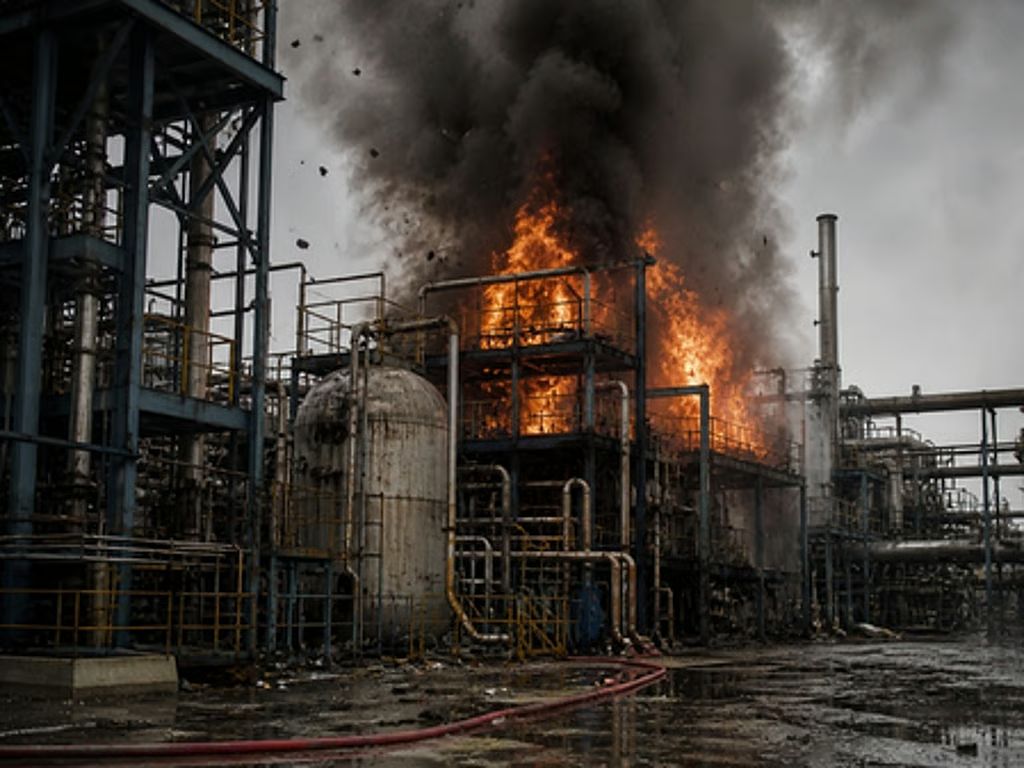
A reactor inside a pharmaceutical manufacturing block exploded while operations were underway, triggering a fire in the third block of the facility. Thick smoke engulfed the block as the fire spread within the affected area. Firefighting personnel arrived with fire tenders and other equipment and worked to douse the flames.
At least nine workers sustained injuries in the blast and subsequent fire. All were transported to Kamineni Institute of Medical Sciences in Narketpally, where one of the workers, identified as Boddu Balakrishna (30) from Chinnakaparthi in Nalgonda district, succumbed to his injuries while undergoing treatment. Two of the remaining injured workers are reported to be in critical condition.
The article notes that this is the second such accident in the same pharmaceutical unit in less than a month, with two workers injured in a similar blast on 9 April.
Casualties
Fatalities: 1 worker (Boddu Balakrishna, 30) died in hospital following the blast.
Injuries: 8 workers injured; at least 2 of them are in critical condition.
Wider Safety Context in Telangana
This reactor blast is the second incident at the same unit in under a month, indicating recurring process‑safety issues at the facility.
The state recently experienced a major industrial disaster in June 2025, when 54 workers were killed and 28 injured in an explosion and fire at the Sigachi Industries chemical plant in Sangareddy district, which manufactured microcrystalline cellulose powder used in pharmaceuticals.
Against this backdrop, newly appointed Director General of Police C. V. Anand has highlighted the need to improve fire‑service training for chemical‑plant incidents and to strengthen coordination between police and other departments as first responders to such disasters.
Preliminary Learnings and Safety Focus
Based on the information available, without speculating beyond it, the following high‑level process‑safety points can be drawn:
Reactor operations in pharma/chemical units demand strict control of reaction conditions (temperature, pressure, mixing, addition rates) and robust interlocks and relief systems to prevent runaway reactions and vessel over‑pressure.
Repeated serious incidents at the same site within a short period are a strong indicator that underlying hazards (design, maintenance, procedures, or safety culture) are not being adequately managed and require comprehensive review and regulatory scrutiny.
Firefighting readiness for chemical reactors and solvent‑rich environments (suitable agents, pre‑incident planning, access routes) is critical to limiting escalation after an initial reactor event.
State‑level initiatives on disaster‑management capacity (specialised fire‑service training, dedicated disaster‑management units, and coordination platforms such as HYDRAA and GHMC) should be leveraged to systematically improve preparedness for chemical and pharma‑sector incidents.
Status
Current toll: 1 dead, 8 injured (with 2 reported in critical condition).
Cause: Described as a reactor blast; detailed root‑cause and regulatory findings have not yet been published.
Regulatory/response: Fire services responded and controlled the blaze; state leadership has publicly stressed the need for improved disaster‑management capabilities for chemical‑plant emergencies.
Speak up before the next one
EntirelySafe gives workers a place to raise safety concerns, and gives safety leaders a way to see the patterns those concerns form — before they become an incident like this one.
Comments
Sign in to join the conversation