minor · other
Tank Fire at LyondellBasell Bayport Choate Site in Pasadena Contained, No Injuries Reported
Mar 11, 2026
0
fatalities
0
injured
Sequence of events
Basic Incident Information
Date of incident: Late Thursday night, March 12, 2026 (reported March 13, 2026)
Time of incident: Around 9:00 p.m. (fire reported at Bayport Choate site)
Location: LyondellBasell Bayport Choate chemical process unit, Pasadena/La Porte area, Harris County, Texas, USA
Type of incident: Fire involving two tanks at a chemical process unit with plume and flaring
Incident Description
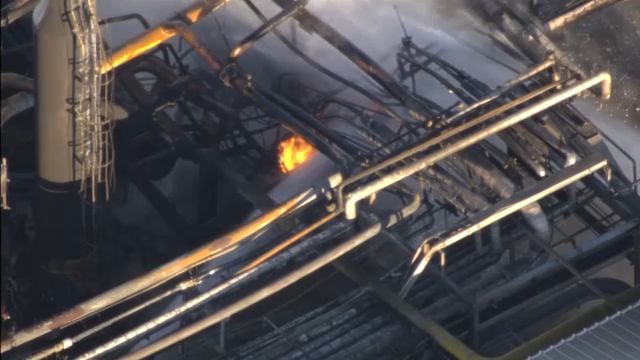
Crews responded late Thursday night after a fire broke out at the LyondellBasell Bayport Choate chemical plant in the Pasadena/La Porte area. The Harris County Fire Marshal’s Office reported that two tanks at the chemical process unit caught fire, but all personnel at the plant were accounted for and no injuries occurred. LyondellBasell confirmed that the fire started at about 9:00 p.m. at its Bayport Choate site.
By 6:42 a.m. Friday, the La Porte Office of Emergency Management reported that the main fire was out, although some activity at the facility was expected to continue. Aerial footage later that morning still showed small, contained flames and heavy flaring from the facility. Overnight, first responders worked to close a valve that was releasing a mixture of chemicals, which contributed to visible flaring and a plume of smoke over the area.
Harris County Judge Lina Hidalgo stated that, although residents were understandably concerned about the large plume, the burning chemicals were not posing a threat to the surrounding community based on available monitoring data. La Porte officials noted that air monitoring was being conducted and that “no actionable readings” had been recorded, so no protective actions (such as shelter‑in‑place) were deemed necessary for the community.
Emergency Response and Monitoring
Harris County Fire Marshal’s Office responded and confirmed two tanks on fire at a chemical process unit, with all workers accounted for and no injuries.
La Porte Office of Emergency Management issued updates through the night and morning, confirming the main fire was extinguished but that operations to fully secure the facility were ongoing.
Harris County Judge Lina Hidalgo reported that responders were working to close a valve releasing a mixture of chemicals and that air monitoring indicated no community health threat from the plume.
Air monitoring was carried out by the Texas Commission on Environmental Quality (TCEQ) at the fenceline and by Harris County Pollution Control in surrounding areas; no actionable readings were reported.
Regulatory and Historical Context
TCEQ confirmed it is in contact with the facility and will investigate the incident.
Records cited in the report show TCEQ previously investigated the Bayport facility for emissions events in the previous year.
According to TCEQ records, there have been 36 instances of unauthorized air contaminant releases at the Bayport facility over the last five years, and LyondellBasell has been fined about 139,000 USD in that period for Clean Air Act violations at the site.
Preliminary Learnings and Safety Focus
Although the cause is still unknown, the incident highlights important process safety and environmental control themes for chemical processing facilities:
Robust integrity management and process safety systems are critical for tanks and associated valves handling hazardous chemicals, including inspection, preventive maintenance, and monitoring for leaks or abnormal conditions.
Effective emergency response coordination between the operator, local emergency management, and regulators (Fire Marshal, OEM, TCEQ, pollution control) is essential to assess and communicate off‑site risk, especially when there is visible flaring and smoke.
Historical patterns of emissions events and air permit violations should drive strengthened management of change, root cause analysis, and enforcement actions to reduce the likelihood and impact of future incidents.
Transparent public communication about air monitoring results and potential health impacts helps maintain community trust during visible but contained industrial fires.
Status
Injuries: None reported; all personnel accounted for.
Fire condition: Main fire extinguished; small contained flames and flaring observed during follow‑up monitoring.
Community impact: No actionable air monitoring readings; no protective actions required for residents according to local authorities.
Cause: Unknown; investigation ongoing by TCEQ and other authorities, in coordination with the facility operator.
Speak up before the next one
EntirelySafe gives workers a place to raise safety concerns, and gives safety leaders a way to see the patterns those concerns form — before they become an incident like this one.
Comments
Sign in to join the conversation